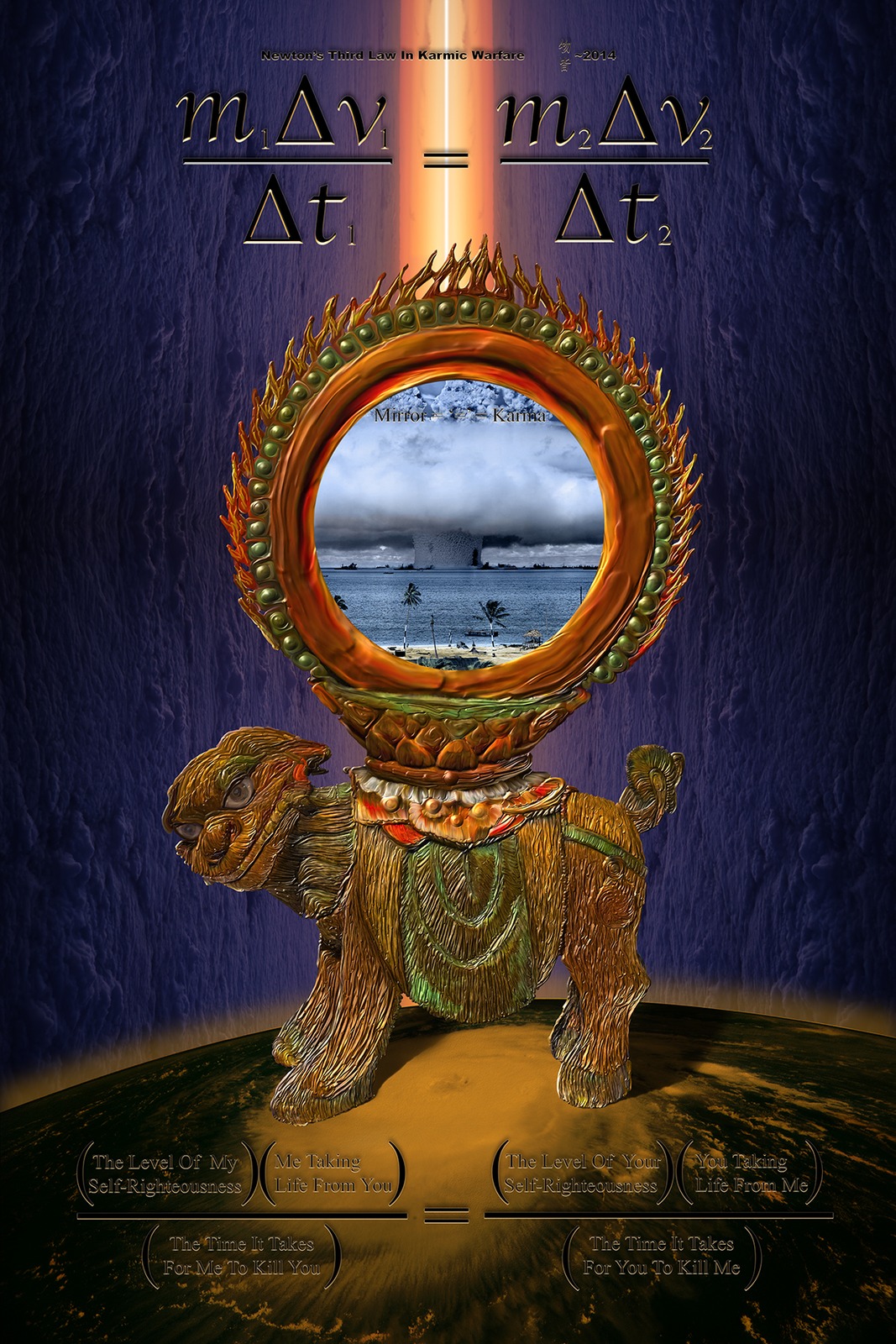
For every action there is an equal and opposite reaction — and what goes around comes around. Two statements of the same shape, set equal to each other and then filled with words.
Each side is a force written as mΔv/Δt, with the words substituted one for one — mass, change in velocity, change in time. The right side is the identical sentence with the pronouns reversed.
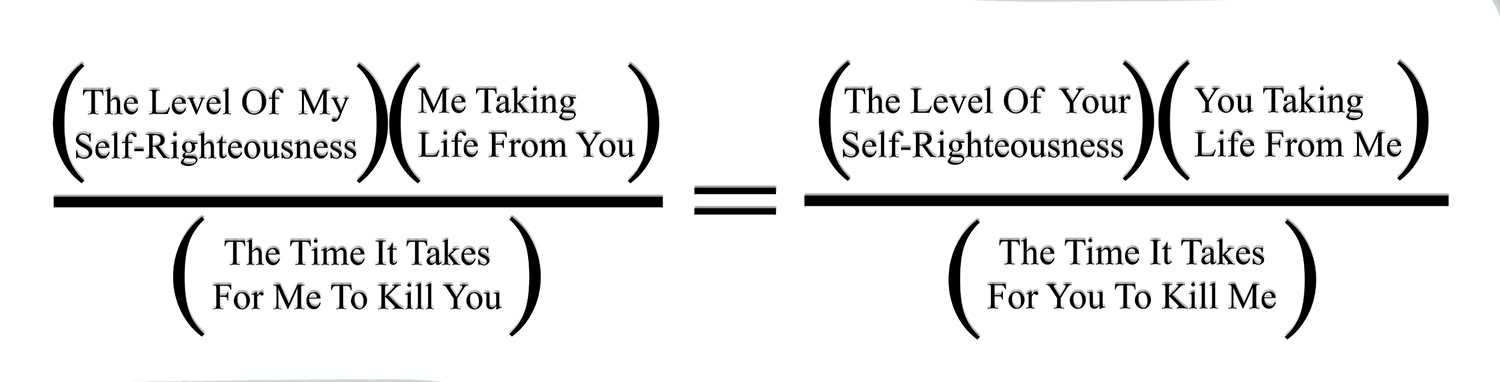
In the paper I call this form a mathematical paradigm poem: a whole model borrowed intact to carry a metaphor. In the language of embodied cognitive linguistics, the borrowed model — here a law of motion, with its fixed relations among mass, velocity and time — is the source domain, and the words placed in its variables are the target domain. The concrete is mapped onto the abstract, and it is that mapping, not the arithmetic, that does the poetic work. Other forms behave differently; a similar triangles poem has no borrowed model, and the question of what maps onto what gets considerably more involved.
A digital painting of the Joseon dynasty Korean karma mirror in the collection of the Los Angeles County Museum of Art — the glass in which the dead are shown their own acts in the Bardo state. In its face, the atomic test at Bikini Atoll. The eyes of the lion are my own.
Written across the glass: Mirror = “=” = Karma — three reflections set equal. The mirror is a reflection of image, the equals sign is a reflection of value, and karma is a reflection of action.
A lecture given at the Los Angeles Center for Digital Art, summer 2019, for the second annual symposium of the Film and Video Poetry Society, alongside the exhibition Analog Sun Digital Moon. Introduced by Jesse Russell Brooks.