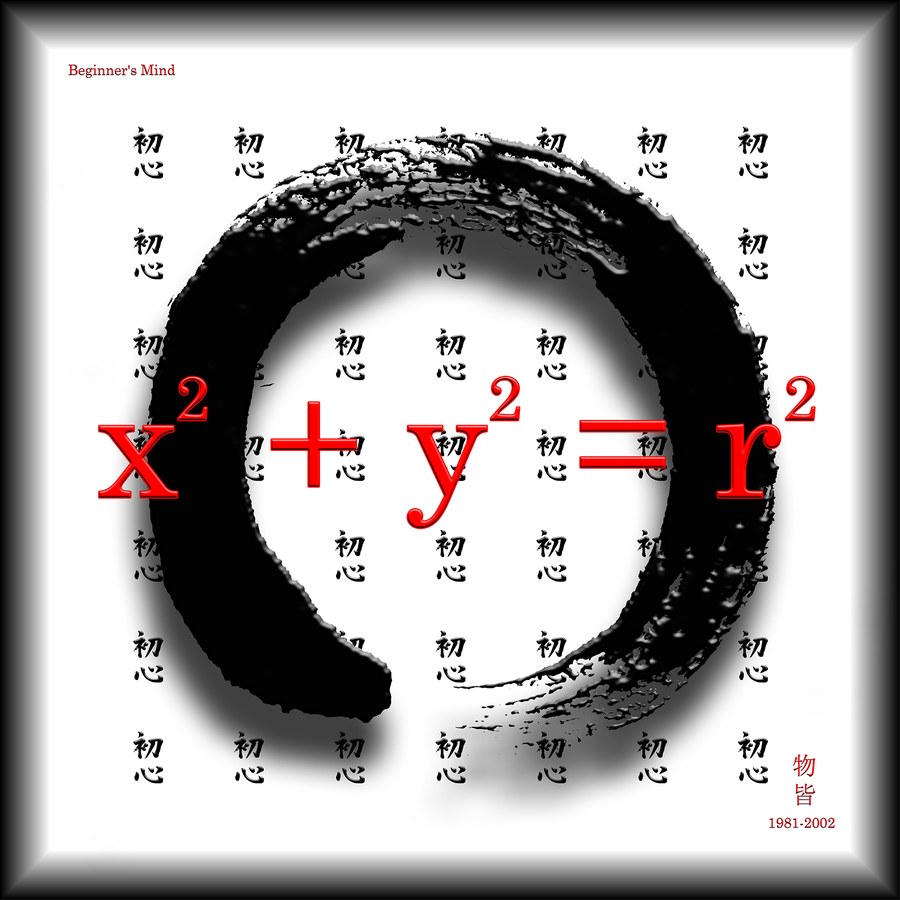
Conceived 1981 · Executed digitally 2002
x² + y² = r²
A hand-brushed ensō with the analytic equation of a circle laid over it and 初心 repeated forty-nine times — beginner’s mind drawn, written and defined in the same frame.
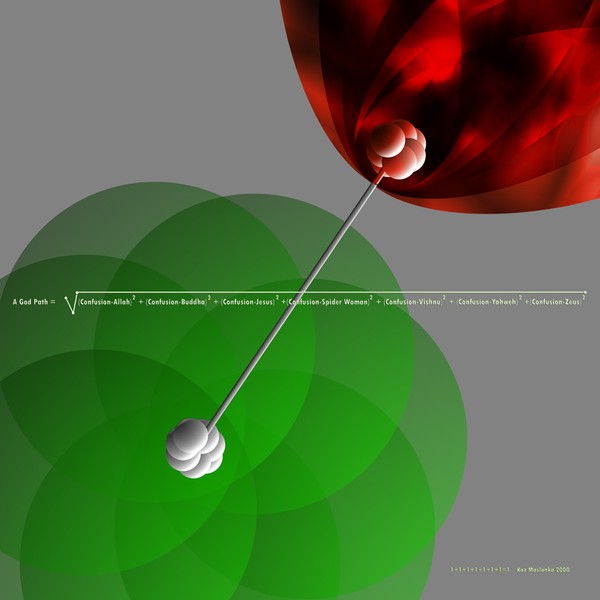
2000
1 + 1 + 1 + 1 + 1 + 1 + 1 = 1
The distance formula run through seven dimensions, each one a gradation from confusion to the point where a deity stands — walk all seven and the seven ones arrive as one.
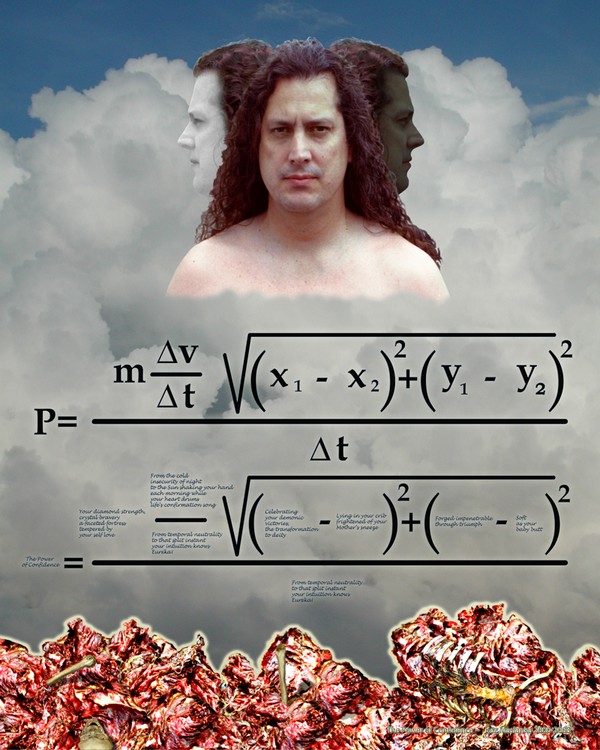
2000–2003
P = m(Δv/Δt)d ⁄ t
The physics equation for power with every variable replaced by a phrase, so confidence is derived rather than described — from lying in the crib frightened of your mother’s sneeze out to the transformation to deity.
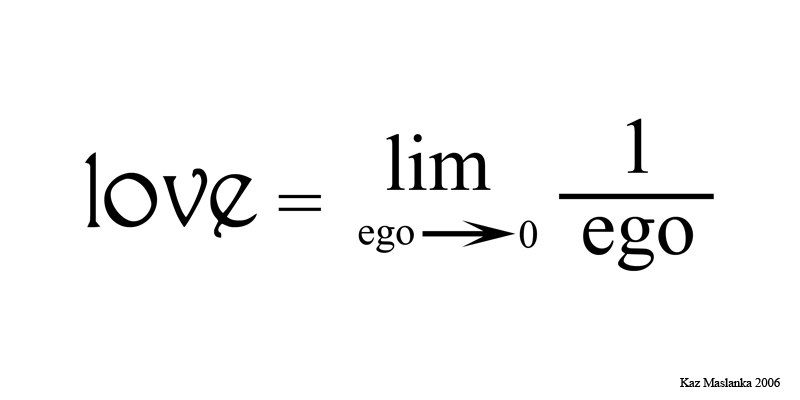
2006
love = limego→0 1/ego
Drive the self toward zero and love climbs without bound — written as a limit, which is to say the condition is approached and never occupied.
2008
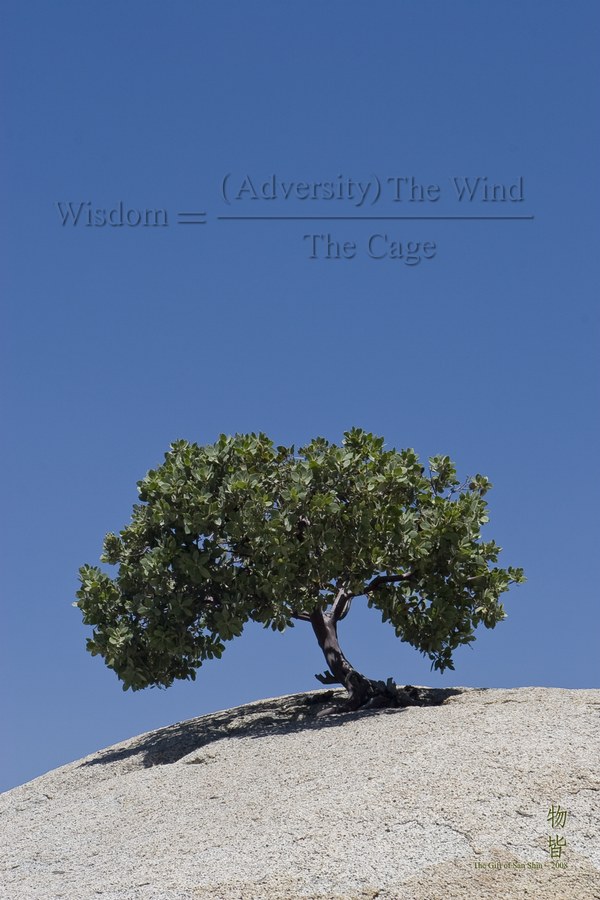
Wisdom = (Adversity)(The Wind) ⁄ The Cage
Wisdom is to adversity as the wind is to the cage — named for the mountain spirit whose shrine stands on temple ground, at the edge of the tradition rather than inside it.
2009
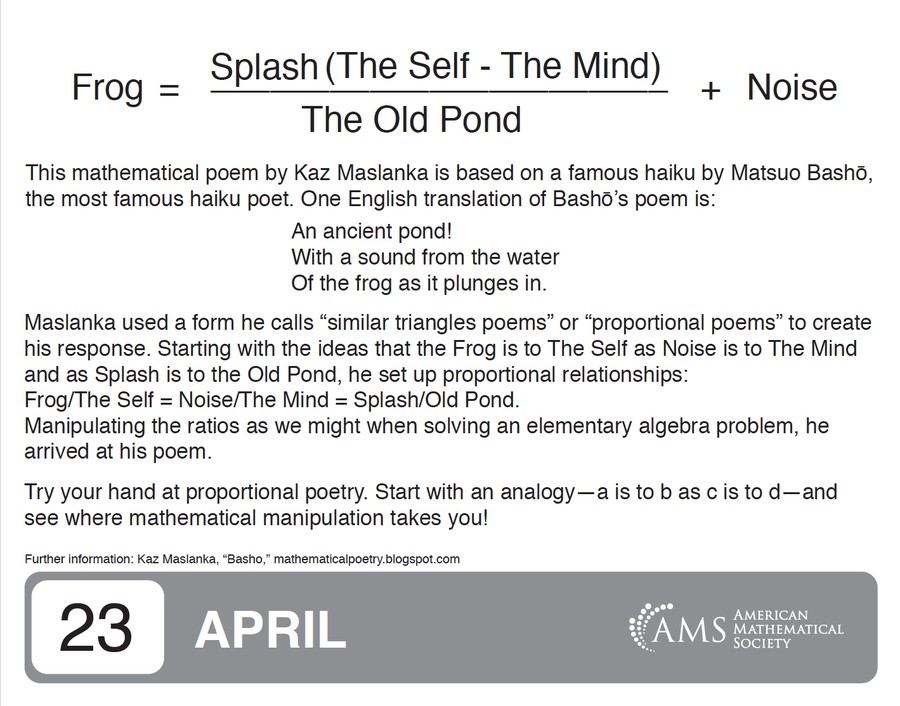
Frog = Splash(The Self − The Mind) ⁄ The Old Pond + Noise
The old pond rebuilt as an expanded similar triangles poem, so that the instant stillness breaks is held as a fixed ratio instead of being translated away.
2009–2022
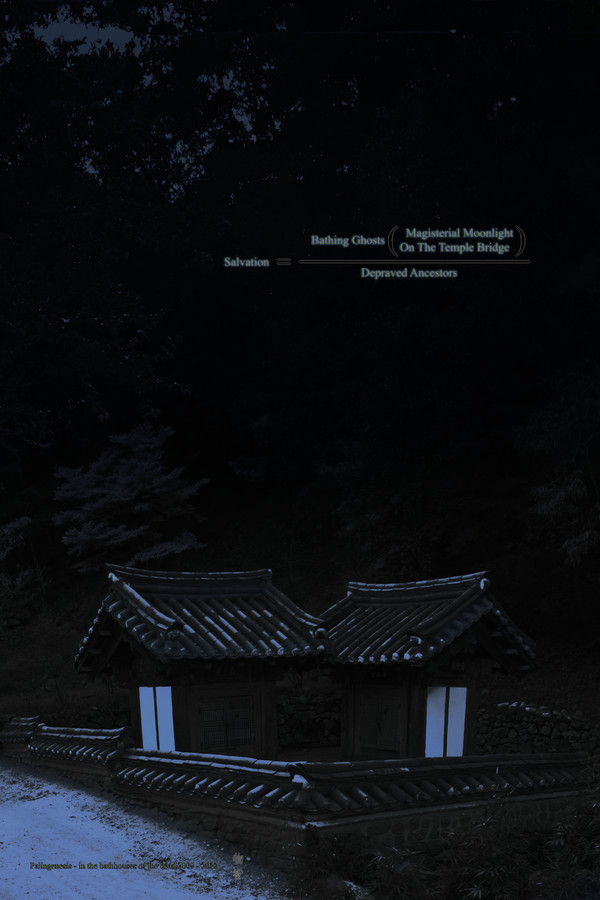
Salvation = (Bathing Ghosts)(Magisterial Moonlight On The Temple Bridge) ⁄ Depraved Ancestors
Salvation is to bathing ghosts as moonlight on the temple bridge is to depraved ancestors — the dead washing in a bathhouse at night, and rebirth set as the rate at which that washing works.
2010 · The Lab Gallery, New York City
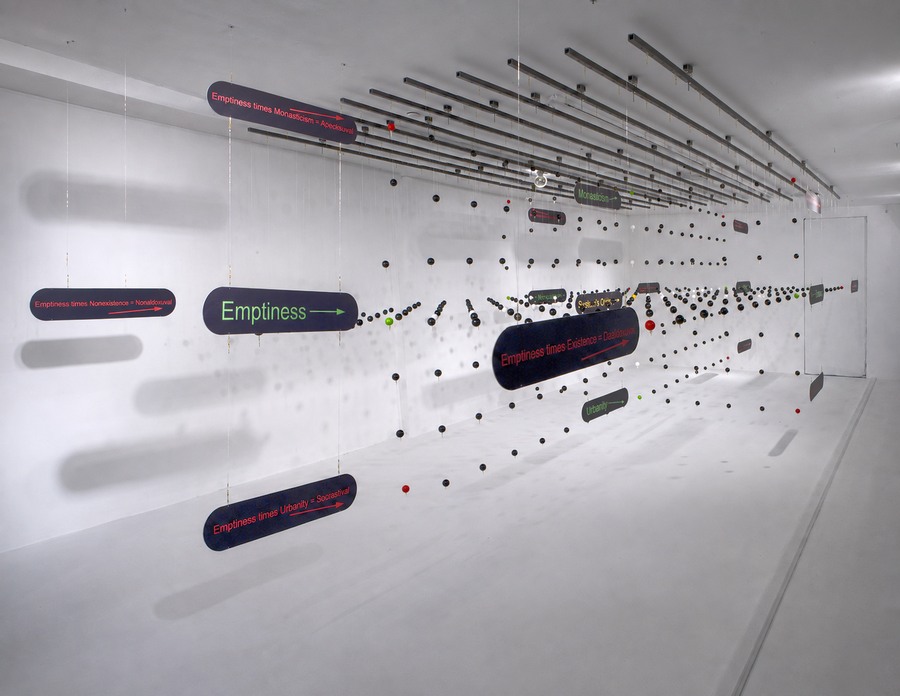
Emptiness / Thinking · Existence / Non-existence · Monasticism / Urbanity
The Three Jewels given a word axis each — Buddha, Dharma, Sangha — and mapped into one Cartesian space, so that three separate refuges become a single continuous gradient.
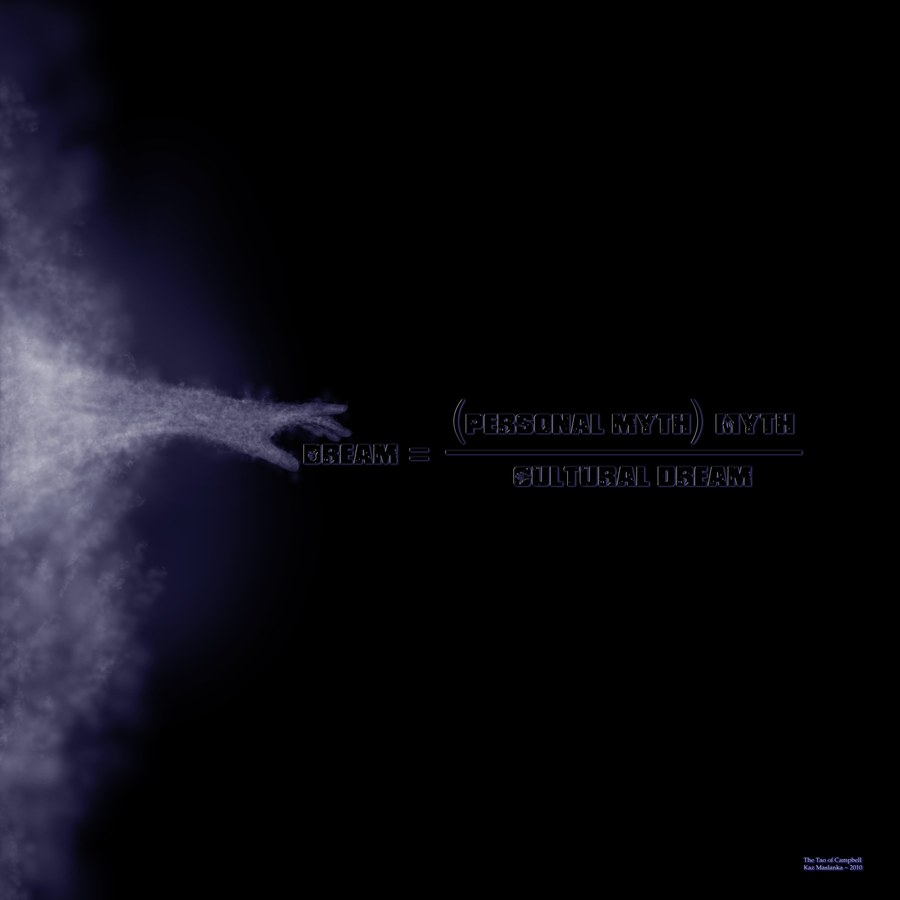
2010
Universal Dream = (Personal Myth)(Universal Myth) ⁄ Cultural Dream
A universal dream is to a personal myth as a universal myth is to a cultural dream — the one story stated as a fixed rate between what a person dreams alone and what a culture dreams together.
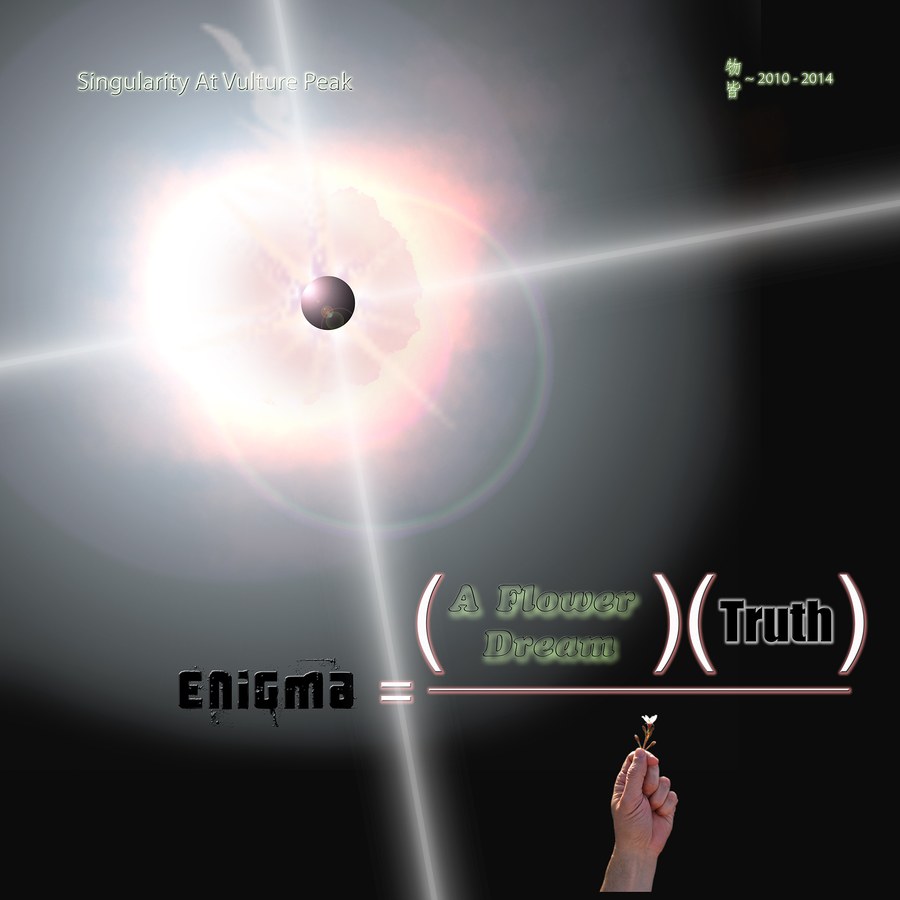
2010–2014
Enigma = (A Flower Dream)(Truth) ⁄ [the hand holding up the flower]
The Flower Sermon written as a proportion, with the hand holding up the flower left as a picture and not a word — the transmission outside scripture kept outside the text.
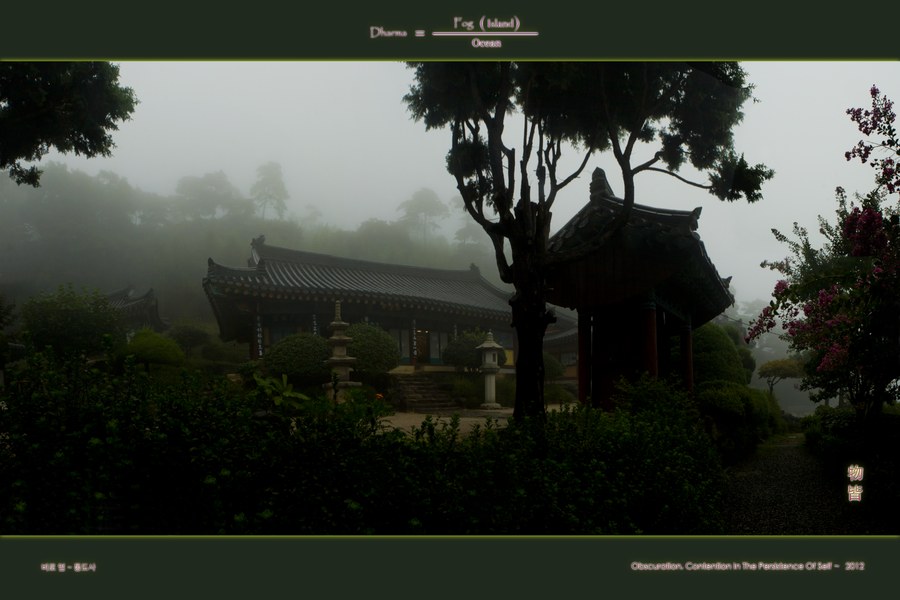
2012–2026
Dharma = (Fog)(Island) ⁄ Ocean
Dharma is to fog as an island is to the ocean — the teaching measured against what obscures it, and against the self that keeps standing in the way.
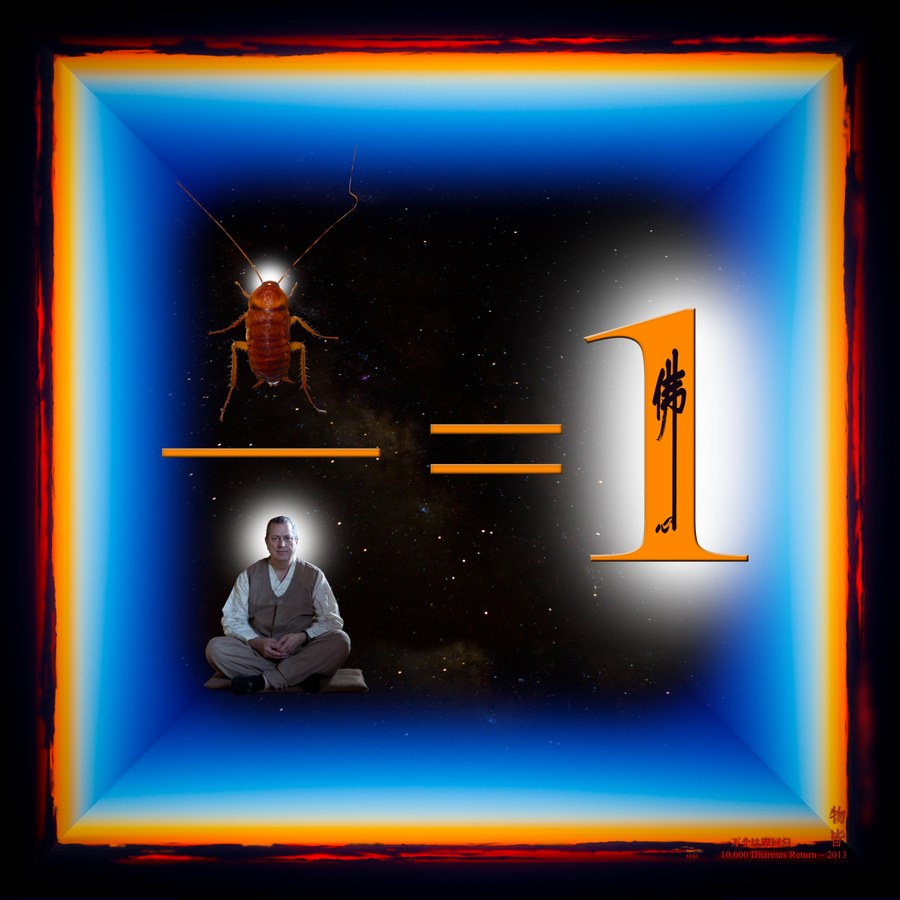
2013 · Collection of the Gwacheon National Science Museum
cockroach ÷ self = 1
A cockroach divided by the artist sitting in meditation equals one, with 佛心 — Buddha’s mind — running down the stem of the numeral. In Chinese ten thousand means infinity, so the one returns to infinity as well.
2014
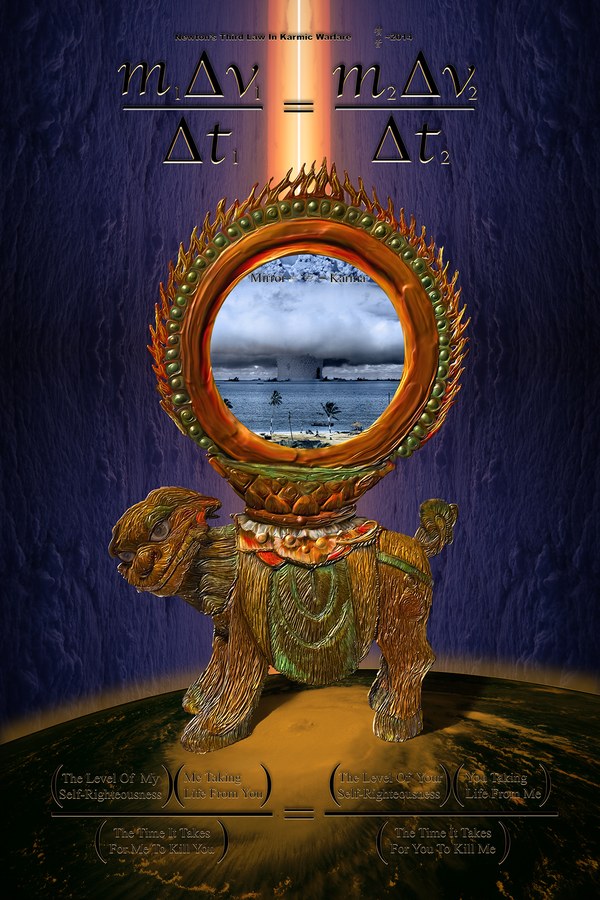
m1Δv1/Δt1 = m2Δv2/Δt2
Action and reaction set equal to what goes around comes around, carried on a Joseon dynasty karma mirror — the glass in which the dead are shown their own acts.
2014
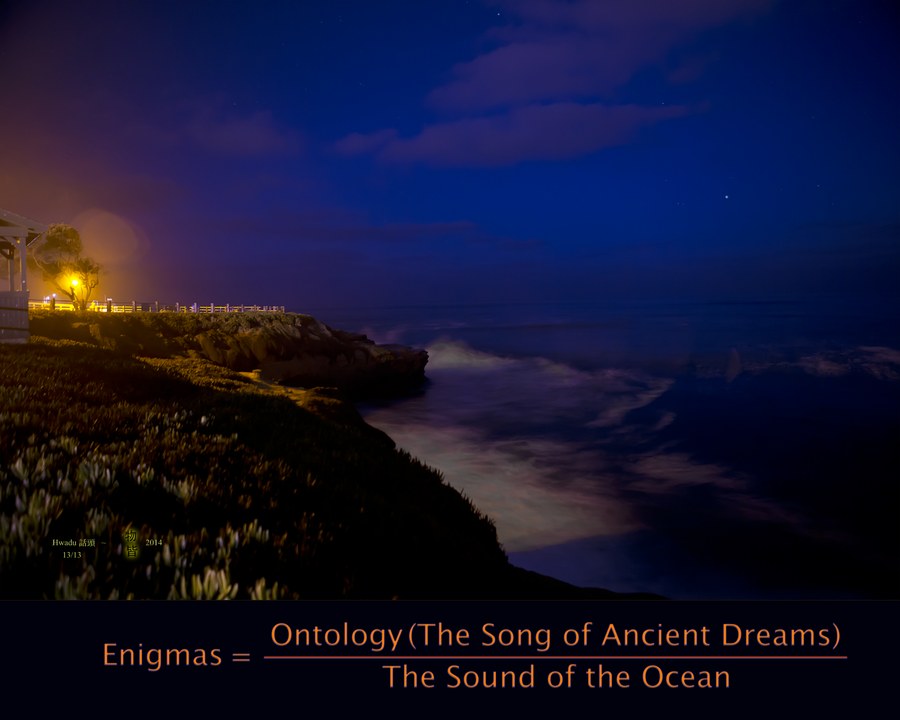
Enigmas = (Ontology)(The Song of Ancient Dreams) ⁄ The Sound of the Ocean
The critical phrase of Zen practice given a structure that can be solved four ways and is answered by none of them.
2015
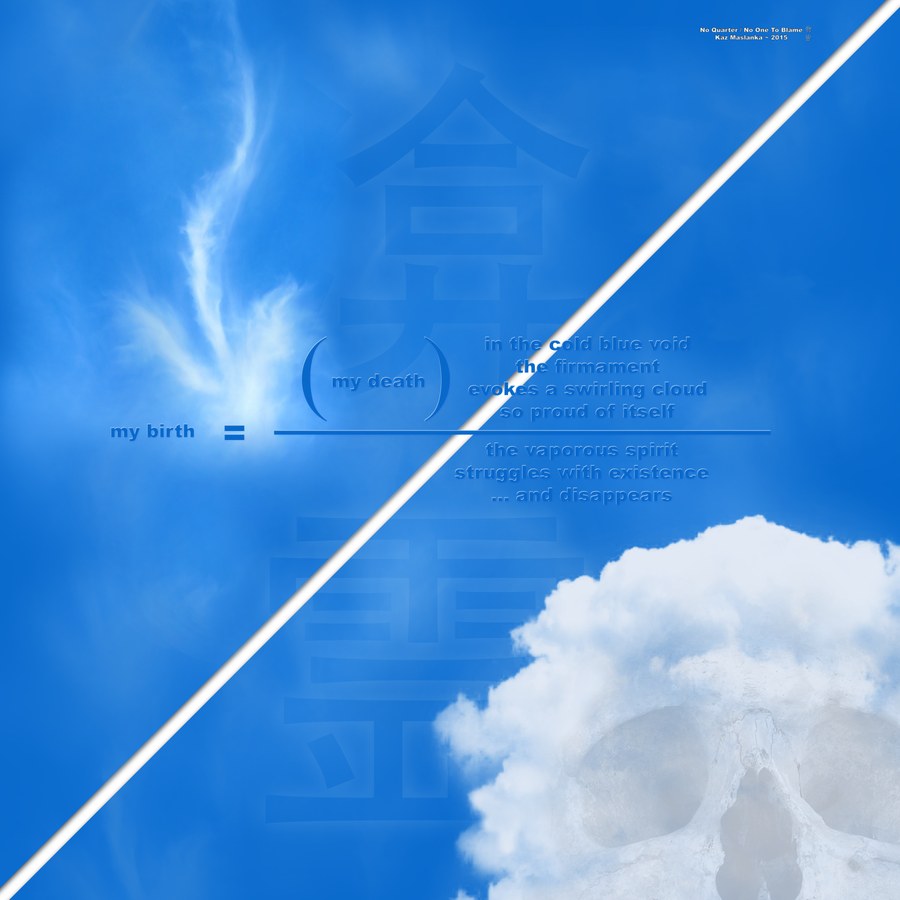
my birth ⁄ my death = the proud swirling cloud ⁄ the vaporous spirit that disappears
Birth is to death as a cloud so proud of itself is to the vaporous spirit that struggles with existence and then is not there — impermanence, with two of the four terms written as whole stanzas.
2020
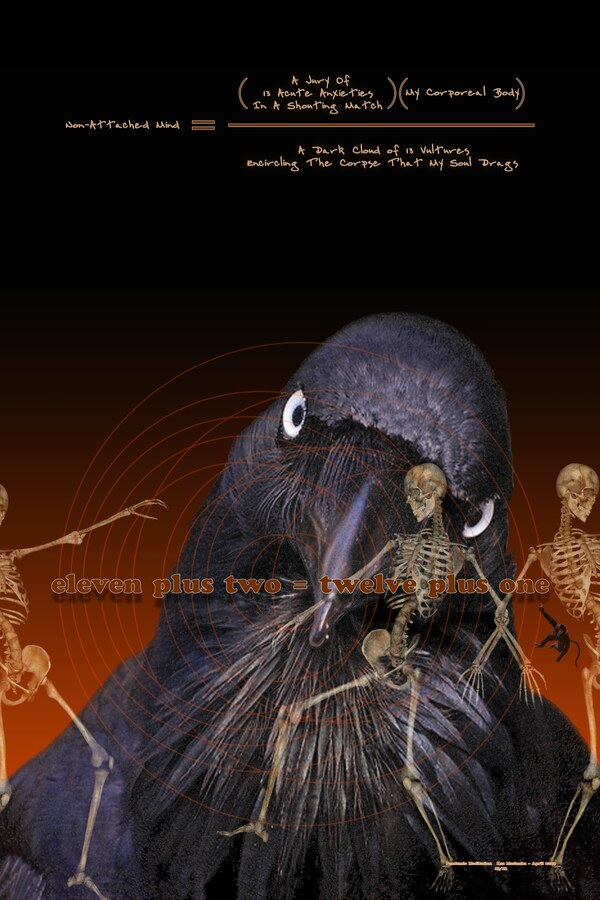
a non-attached mind ⁄ a jury of 13 acute anxieties = my corporeal body ⁄ 13 vultures encircling the corpse my soul drags
Out of a meditation in 2020 that would not settle: thirteen anxieties went spinning around my mind — empty, and yet I was attached enough to count them.
2022
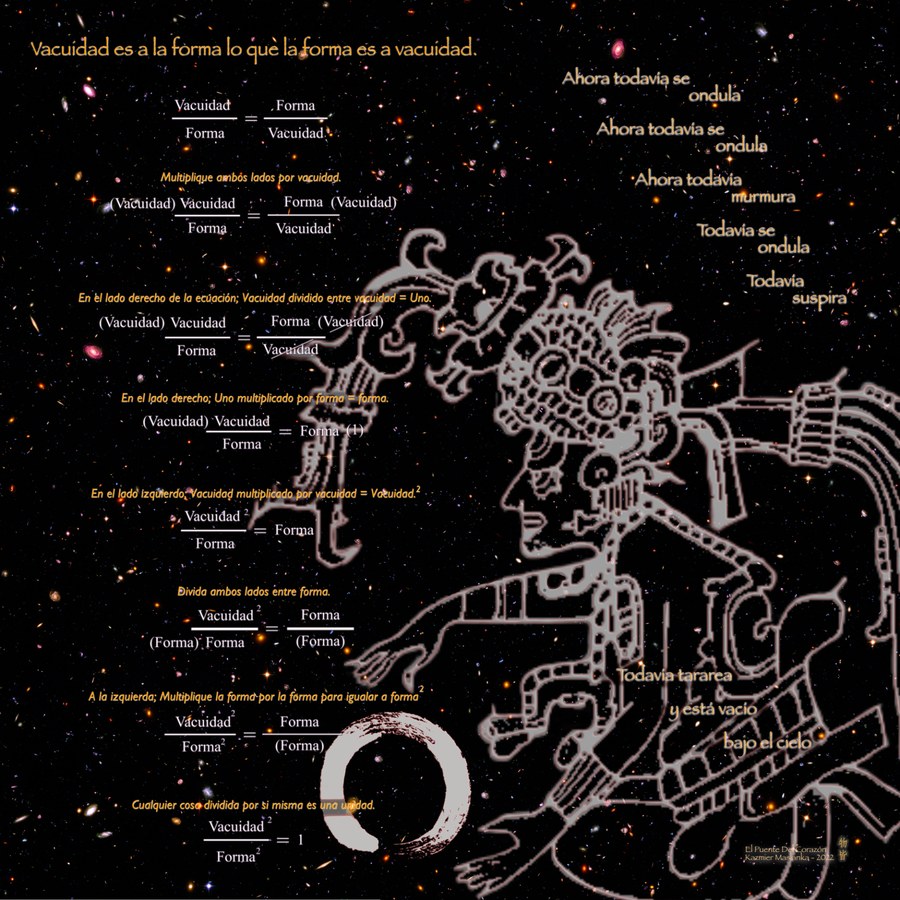
Vacuidad ⁄ Forma = Forma ⁄ Vacuidad
The Heart Sutra’s form and emptiness written as a proportion in Spanish and reduced by algebra to one — at‑one‑ment — with Heart of Sky reaching for an ensō.
2022
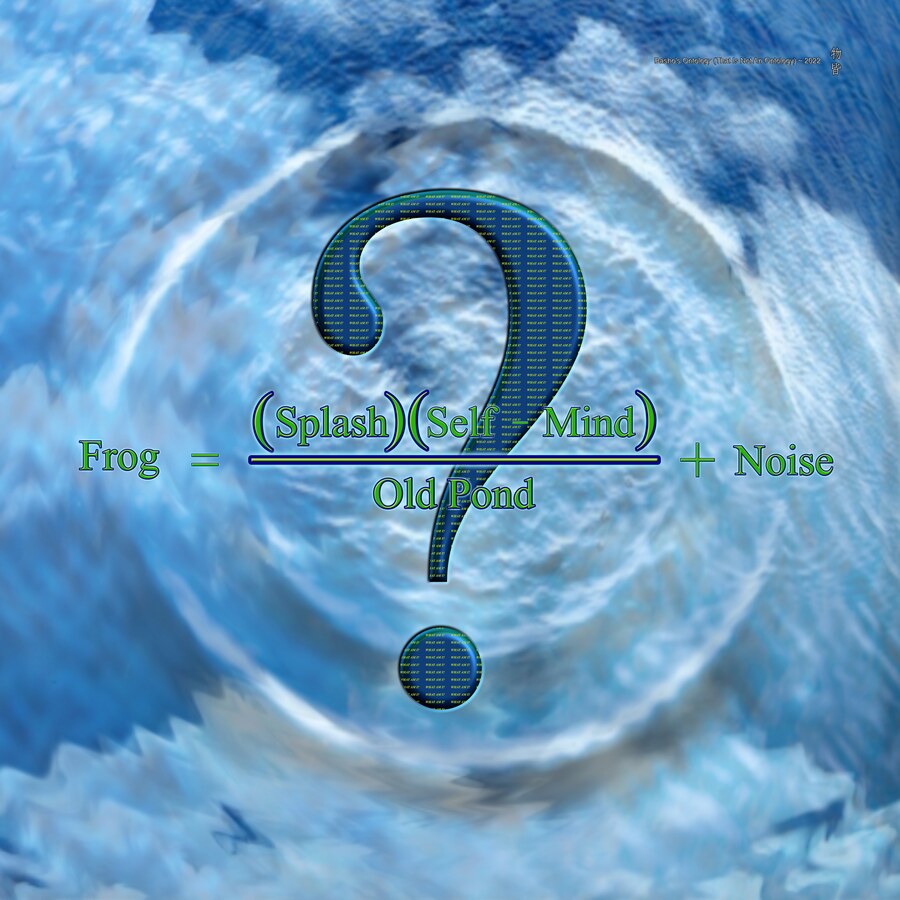
Frog = (Splash)(Self − Mind) ⁄ Old Pond + Noise
The old pond again, solved for the frog — so the ontology the title refuses is exactly the one the algebra hands back.
2022 · Bridges 2024
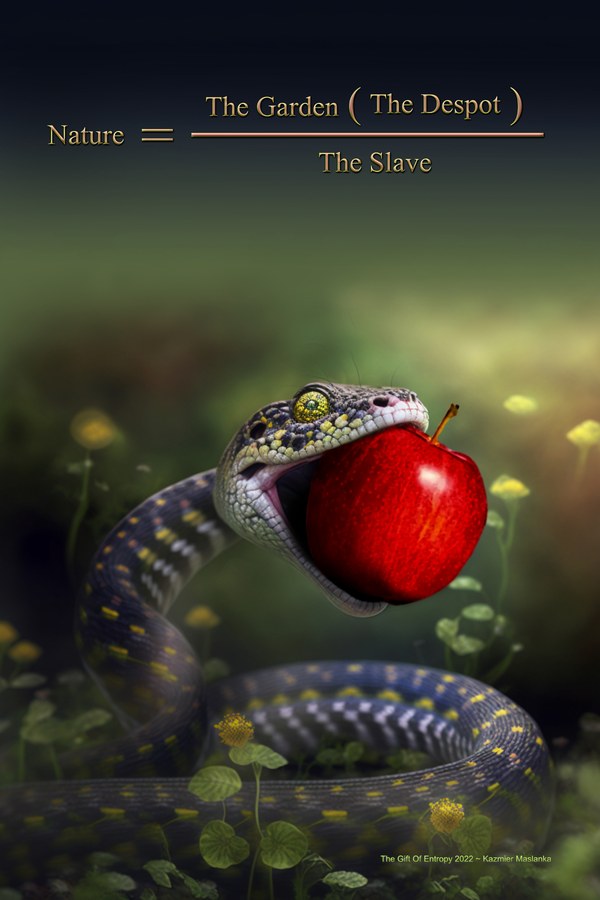
Nature = (The Garden)(The Despot) ⁄ The Slave
Nature is to the garden as the despot is to the slave — and if we are all conscripted into lowering our own entropy at somebody else’s expense, then the utopian ideal cannot exist, because entropy holds us in check.
2024
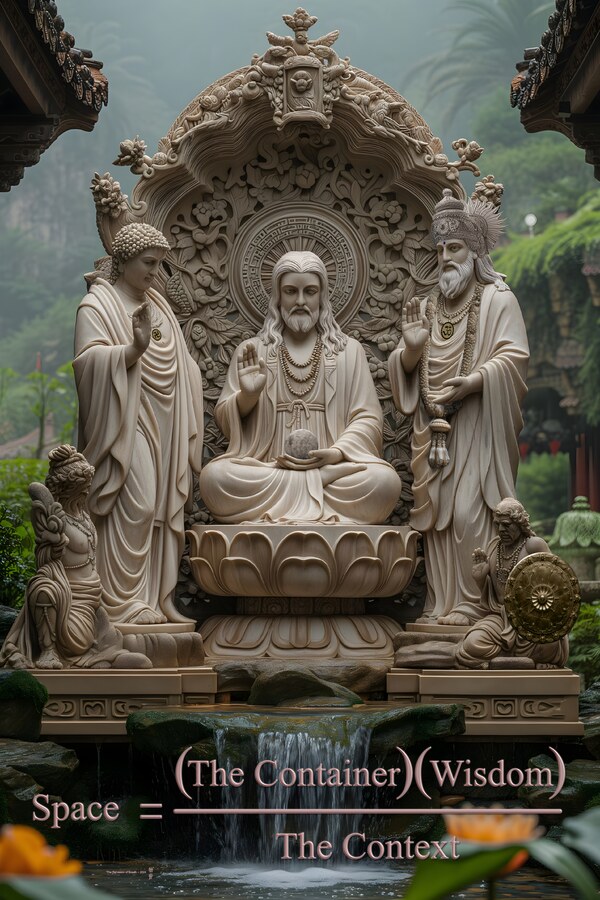
Space = (The Container)(Wisdom) ⁄ The Context
Space is to the container as wisdom is to the context — emptiness approached from the side of what holds it rather than what fills it.
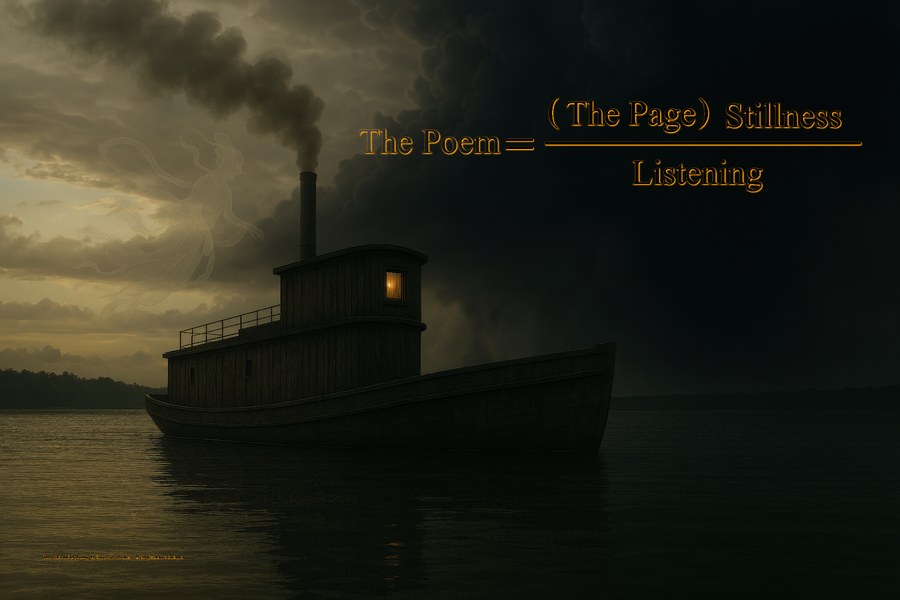
2025
The Poem = (The Page)(Stillness) ⁄ Listening
The poem is to the page as stillness is to listening — the practice of attention stated as a rate rather than a virtue.
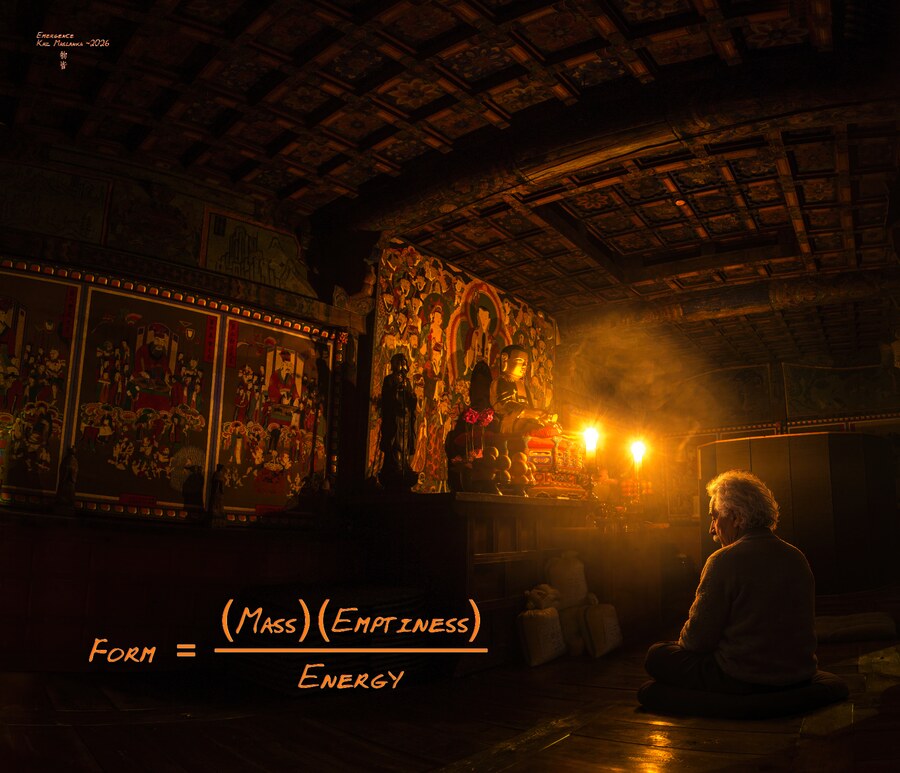
2026
Form = (Mass)(Emptiness) ⁄ Energy
The Heart Sutra’s pair laid over mass and energy: form is to mass as emptiness is to energy.
Watch
the video
2026 · 7 minutes
Form is emptiness · Emptiness is form
The Heart Sutra’s long catalogue of negations sung as a blues, ending on the mantra, and then Hyon Gak Sunim’s voice asking What am I?